
ABSTRACTIONISM : The random feeling
The simplistic taste of reality

The hidden meaning is sometimes, the forever present more direct truth.
You might have seen many abstract art pieces and thought that one sentence every time,"I can make that" and felt that seeing the price of a painting worth thousands, which might have random squiggly lines of paint or a huge coloured rectangle on a single colour background. You can't see the artist's intention but what if you could or you can make your own?
People quickly dismiss something abstract as easy, but we shouldn't do that. Let's take a deep look at this form of random art and get its feeling.
How did it begin?
Abstractionism originally started from art and spread its wings through all creative fields and arts.
Abstractionism has its roots in the late 19th century through the 20th century, at that time artists started to experiment with new ways of representation of their feelings through various new techniques. The earliest starting point of it was impressionism, which captured the feeling of colours and light of our natural world with open composition and visible brush strokes. It got its name from critic Louis Leroy, when he saw Claude Monet's Sunrise exhibited in 1874 and called it an "impression" and not a complete painting.
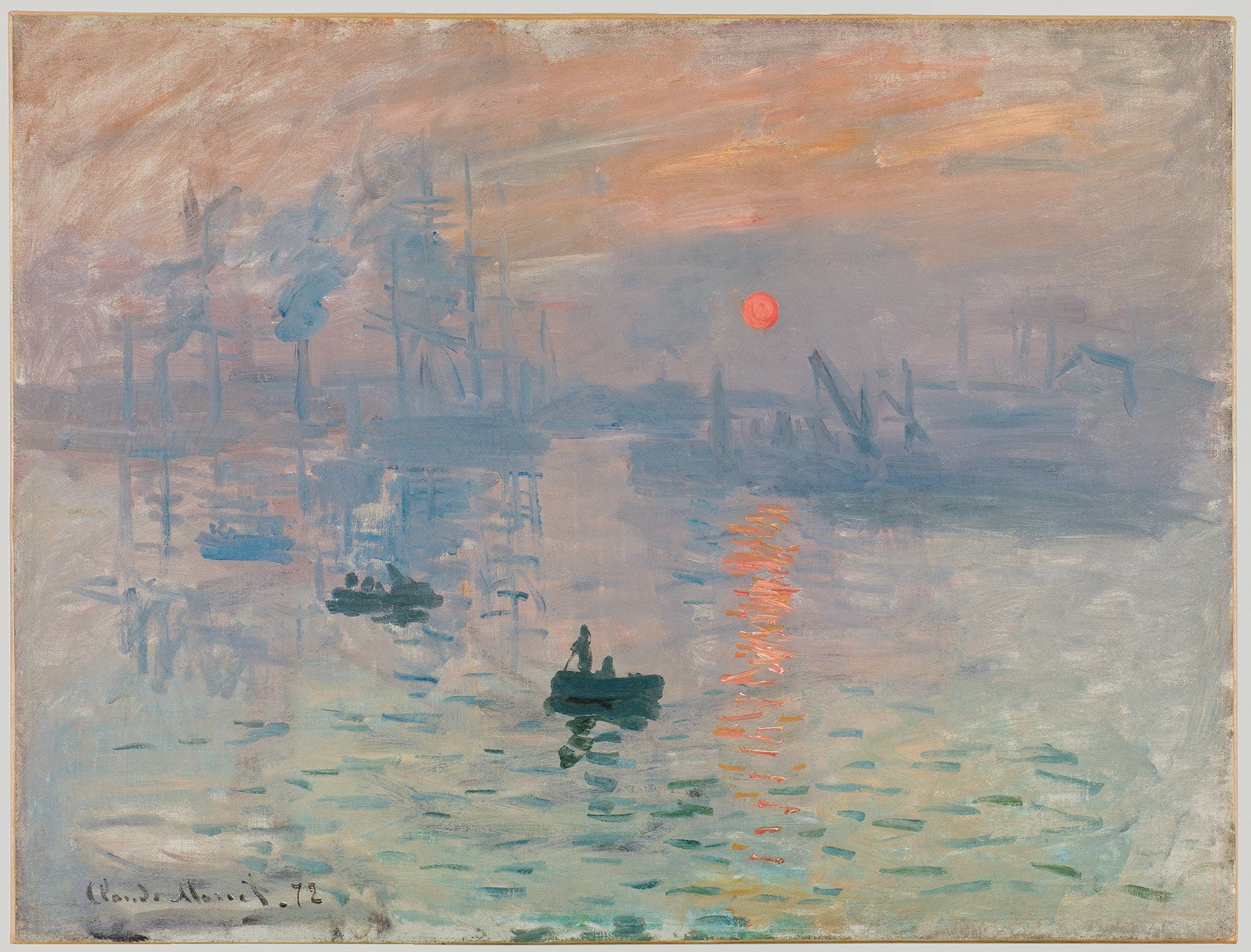
This however was not that different from traditional representational art, but this changed when Cubism and Futurism came along in the early 20th century. Cubist artists like Pablo Picasso and Georges Braque started to use Cubism and create pieces with geometric shapes and simple colour palettes and multiple perspectives which objected the viewers to look at the world in new ways. Futurist artists like Umberto Boccioni and Giacomo Balla also went to capture the energy and dynamics of life through inorganic shapes, geometric lines, vitality and speed.
In the coming years, it went on to evolve and diversify, bringing more forms in, like expressionism, constructivism, surrealism and minimalism which all individually explored different regions of art and design.
What is Abstractionism?
In a simple manner, I will say that Abstractionism is presentation of ideas or concepts in an abstract manner.
An abstract is having meaning with an intangible thought that can be processed and understood in multiple ways and doesn't have a recognizable representation of physical reality. When an idea is simplified to its basis and is converted as a general quality and becomes isolated from physical reality and specific objects.
Abstractionism favours abstract forms, and feelings over figurative depiction, the word describing this best, popularized by gen z, is vibe. It values the vibe more than the figures.
What other fields did it influence?
The form in which it is still most prominent, from the early ages, visual arts helped people convey meaning through it and it gave birth to different techniques keeping the idea in the centre of it and embracing it as the central tenet.
Beyond its most prominent field, it also got popularized in music, literature, philosophy, writing, architecture, etc.
In music, many composers like Arnold Schoenberg and John Cage used it goes beyond tonality and harmony by using different instruments and experimenting with new sounds. In sculpturing Barbara Hepworth among others used it to explore new possibilities of shapes and materiality to create sculptures distinct from reality. In architecture, people like Frank Gehry and Zaha Hadid among others used it to create spaces that emphasize form and the environment that transcended from traditional spaces and had a dynamic and striking factor among themselves.


It was seen and is being seen heavily in writing and literature to explore new ways to convey emotion and language to create meaning. Abstract literature creates a unique and unconventional experience for the reader. Writers experiment with grammar and syntax to make expressions, playing with sounds, rhythms, repetition, variation, and figures of speech to make patterns of meaning. It is also used in narrative structures, where the story takes disorganized themes and a non-linear timeline to tell a story in a more immersive and experimental manner. It helps in breaking down complex concepts to change the human experience and break boundaries.
Some examples of this are, James Joyce's "Finnegan's Wake", a novel that conveys a series of dreamlike narratives that are fragmented in different ways with dense language and syntax. Gertrude Stein's "Tender Buttons", is a collection of prose poems using language in unconventional ways to extract meaning. Abstract writing challenges readers to engage with the subject in new ways and try to change their ways to perceive.
Why is it widespread?
Abstractionism comes in light in waves and becomes a big thing every few years with the introduction of a new medium of expression.
It allows artists and creators to break from the constraints of representation where everything has to look like something. It helps emphasize other aspects of creation. It helps people to express the complexities and ambiguities of the modern world.
Abstract is preferred over representational creations among individuals who enjoy novelty and ambiguity. People who are sensation-seeking, open-minded, field-independent thinkers, and are particularly low in desire for a simple order.
Abstract gives you freedom to explore something as you want and give your own meaning to it. This personal process enriches a viewer's experience of a piece. A thousand people might have a different perspective to look at and generate distant emotions from each other.
We can say various people embracing it through the decades, solidifying its universal appeal as being simple and effective to convey emotion.
We are attracted to what we cannot understand. - Jean-Luc Godard
What can we say about the person using abstractionism?
We can say that, people who don't like to have a simple order, people with free-form thinking and flowy nature of thought use abstraction to communicate in a more immediate manner. Someone can create something more intuitive and tap into the emotional human experience and express feelings difficult to, in other forms.
Creating a powerful experience for the person experiencing it requires a certain level of skill in the craft which shows the person’s experience and determination.
How is it evolving with us?
It continues to evolve with the introduction of new techniques and "new ideas". One new trend is the focus on materiality, which grants more focus on the materials, like recycled objects to create sculptures or 3D printing a near-impossible object.
We are also seeing the exploration of relationships with the natural world, using rhythms and patterns from nature.
Living in the ever-increasing rise of technology and its advancement of it, helps artists to create generative things, and virtual and augmented reality designs, which opens a new wave of opportunities to dabble with.
It continues to evolve and adapt to the human experience and helping explore new, and tap into more human emotions.
Everything doesn't have to be understood, it could be felt. It can have a greater meaning to you than what the person who made it did for himself. We need to see it from a broad sense and take it all in and feel it.
Perspectives give meaning to the world, the viewer gives meaning to the creation.
Create an abstract piece and see what it means to you and what it means to others. Take other perspectives, some like yours and some vastly different, maybe creating a completely different view for you.
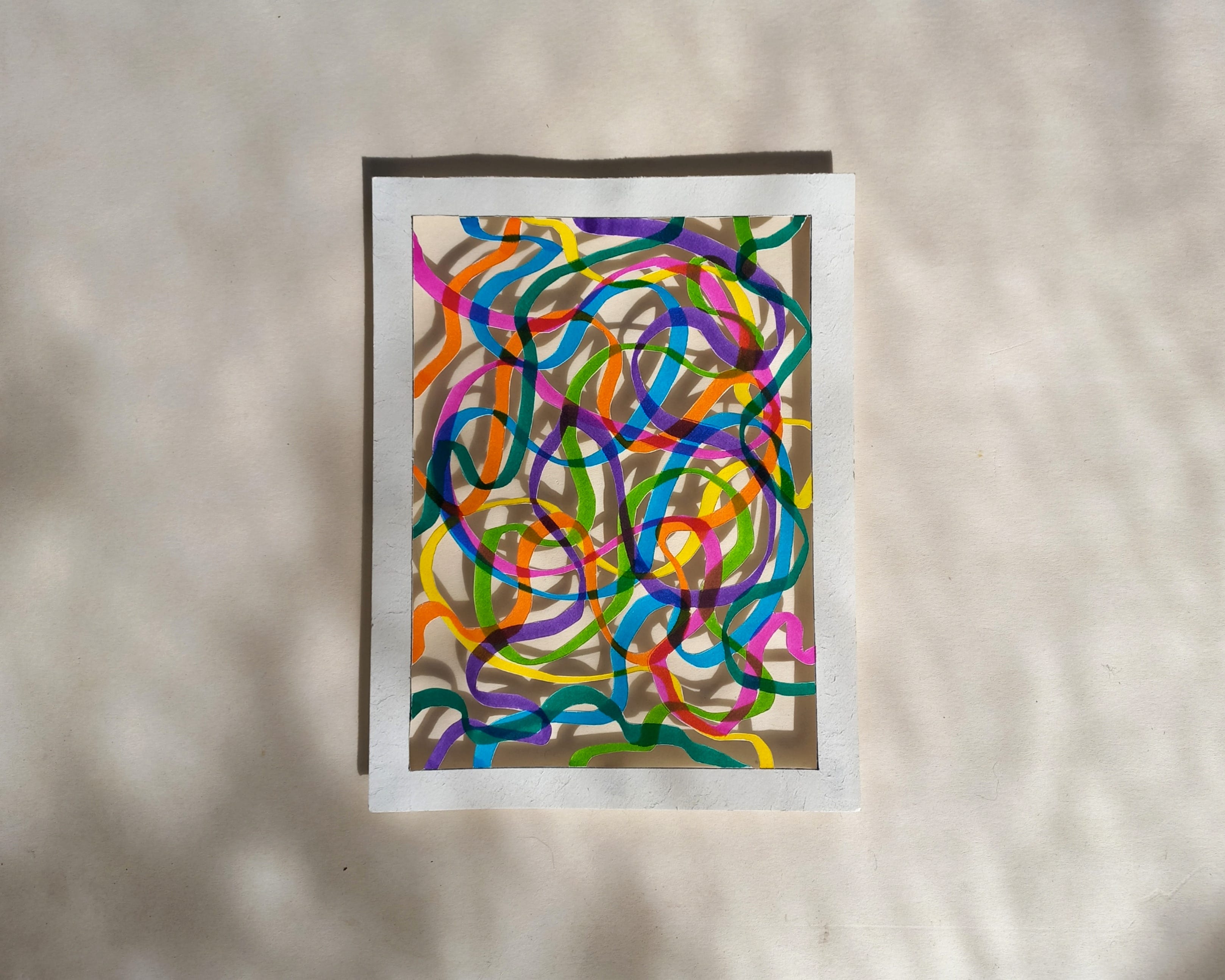
Sometimes abstract is more clear and fulfilling than directness.
Stay Amazing.